New method significantly improves the accuracy of measuring cell counts of marine picocyanobacteria, a crucial component of oceanic ecosystems. Continue reading Innovative Sequencing Technique Enhances Marine Microbial Research

New method significantly improves the accuracy of measuring cell counts of marine picocyanobacteria, a crucial component of oceanic ecosystems. Continue reading Innovative Sequencing Technique Enhances Marine Microbial Research

A recent study led by Anne Willem Omta highlights the pivotal role of biological processes in regulating carbon storage in the ocean during the Last Glacial Maximum. Continue reading New Insights into Ocean Carbon Storage During the Last Glacial Maximum
Omta, A.W., Follett, C.L., Lauderdale, J.M. et al. (2024), Carbon isotope budget indicates biological disequilibrium dominated ocean carbon storage at the Last Glacial Maximum, Nat. Commun., doi: 10.1038/s41467-024-52360-z Continue reading Carbon isotope budget indicates biological disequilibrium dominated ocean carbon storage at the Last Glacial Maximum
Sher, D., Segrè, D. & Follows, M.J. (2024), Quantitative principles of microbial metabolism shared across scales, Nat. Microbiol., doi: 10.1038/s41564-024-01764-0 Continue reading Quantitative principles of microbial metabolism shared across scales
Omta, Anne Willem, Justin D. Liefer, Zoe V. Finkel, Andrew J. Irwin, Daniel Sher, Michael J. Follows (2024), A model of time-dependent macromolecular and elemental composition of phytoplankton, Journal of Theoretical Biology, doi: 10.1016/j.jtbi.2024.111883
Continue reading A model of time-dependent macromolecular and elemental composition of phytoplankton
Stephanie Dutkiewicz, Christopher L. Follett, Michael J. Follows, Fernanda Henderikx-Freitas, Francois Ribalet, Mary R. Gradoville, Sacha N. Coesel, Hanna Farnelid, Zoe V. Finkel, Andrew J. Irwin, Oliver Jahn, David M. Karl, Jann Paul Mattern, Angelicque E. White, Jonathan P. Zehr, Virginia Armbrust (2024), Multiple biotic interactions establish phytoplankton community structure across environmental gradients, Limnology and Oceanography, doi: 10.1002/lno.12555 Continue reading Multiple biotic interactions establish phytoplankton community structure across environmental gradients
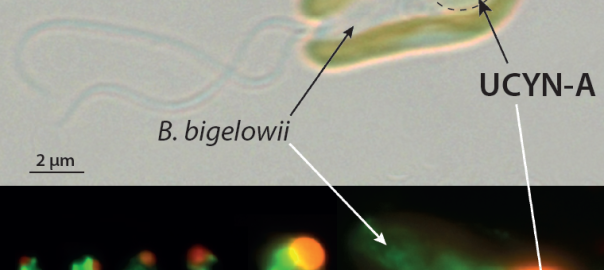
Human cells, as well as cells of animals, plants, fungi, and other eukaryotic organisms, originally emerged hundreds of millions of years ago through the symbiotic association of some primitive bacteria that, until then, had lived independently. This represented an unprecedented leap in the complexity of life, where some bacteria, after having resided within cells for a long time, eventually transitioned into becoming organelles of these cells. This transition allowed for the compartmentalization and control of bacterial-derived functions within the eukaryotic cell. CBIOMES Mick Follows contributes to a new paper in the journal Cell.
Continue reading A Marine Symbiosis Allows a Better Understanding of Our Cells Evolution
Alexandra Jones-Kellett and Michael J. Follows (2024), A Lagrangian coherent eddy atlas for biogeochemical applications in the North Pacific Subtropical Gyre, Earth System Science Data, doi: 10.5194/essd-16-1475-2024 Continue reading A Lagrangian coherent eddy atlas for biogeochemical applications in the North Pacific Subtropical Gyre
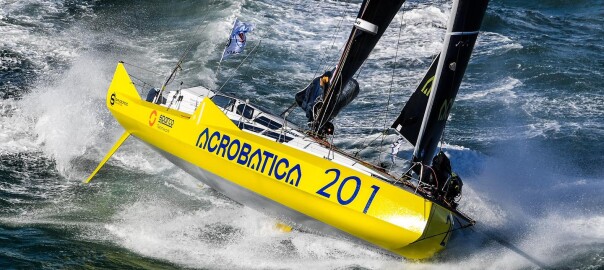
In a remarkable collaboration, Enrico Ser-Giacomi, a physicist specializing in fluid dynamics and marine ecology, has teamed up with Alberto Riva, an elite yacht designer and skipper, to turn a private yacht into an unconventional marine science laboratory. Continue reading A Physicist, a Skipper, and an Idea
Sergio M. Vallina, Charlie Gaborit, Celia Marrase, Josep M. Gasol, Nixon Bahamon, Michael J. Follows, Guillaume Le Gland, Pedro Cermeño (2023), Seasonal dynamics of phytoplankton community assembly at the Blanes Bay Microbial Observatory (BBMO), NW Mediterranean Sea, Progress in Oceanography, doi: 10.1016/j.pocean.2023.103125