Darwin researchers reveal how ocean eddies shape chlorophyll patterns across seasons and regions. Continue reading Satellite Eyes on Swirling Seas

Darwin researchers reveal how ocean eddies shape chlorophyll patterns across seasons and regions. Continue reading Satellite Eyes on Swirling Seas

Research using ECCO-Darwin and co-authored by Stephanie Dutkiewicz helps uncover link between glacier melt and coastal productivity in Greenland. Continue reading A Cold Bloom: Modeling Productivity in West Greenland

Tiny organisms can adapt to changing light, much to our benefit: Enjoy NASA’s Storymap for Mattei et al (2025) Continue reading Am I Blue? Green? Something in Between?

CBIOMES researcher contributes to study demonstrating that pigment diversity in the cyanobacteria Synechococcus has enabled this organism to colonize all light environments. Continue reading Ocean Chameleons: How phytoplankton adapt to light to conquer the world’s waters
Francesco Mattei, Anna E. Hickman, Julia Uitz, Louison Dufour, Vincenzo Vellucci, Laurence Garczarek, Frédéric Partensky, Stephanie Dutkiewicz (2025), Chromatic acclimation shapes phytoplankton biogeography, Science Advances, doi: 10.1126/sciadv.adr9609 Continue reading Chromatic acclimation shapes phytoplankton biogeography

New findings illuminate how Prochlorococcus’ nightly “cross-feeding” plays a role in regulating the ocean’s capacity to cycle and store carbon. Continue reading An Abundant Phytoplankton Feeds a Global Network of Marine Microbes
Alexandra E. Jones-Kellett, Jesse C. McNichol, Yubin Raut, Kelsy R. Cain, François Ribalet, E. Virginia Armbrust, Michael J. Follows, and Jed A. Fuhrman (2024), Amplicon Sequencing with Internal Standards Yields Accurate Picocyanobacteria Cell Abundances as Validated with Flow Cytometry, ISME Communications, doi: 10.1093/ismeco/ycae115 Continue reading Amplicon Sequencing with Internal Standards Yields Accurate Picocyanobacteria Cell Abundances as Validated with Flow Cytometry

New findings challenge current thinking on the ocean’s role in storing carbon. Continue reading Study: Weaker ocean circulation could enhance CO2 buildup in the atmosphere
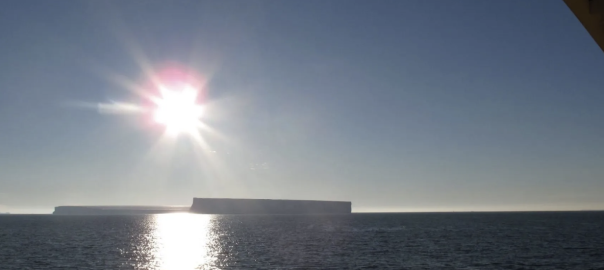
Vitamin B12 deficiency in people can cause a slew of health problems and even become fatal. Until now, the same deficiencies were thought to impact certain types of algae, as well. A new study led by former MIT CBIOMES postdoc Deepa Rao examined the algae Phaeocystis antarctica’s (P. antarctica) exposure to a matrix of iron and vitamin B12 conditions. Results show that this algae can survive without B12, something that computer analysis of genome sequences had incorrectly indicated. Continue reading Vitamin B12 adaptability in Antarctic algae has implications for climate change
Stephanie I. Anderson, Clara Fronda, Andrew D. Barton, Sophie Clayton, Tatiana A. Rynearson, Stephanie Dutkiewicz (2023), Phytoplankton thermal trait parameterization alters community structure and biogeochemical processes in a modeled ocean, Global Change Biology, doi: 10.1111/gcb.17093 Continue reading Phytoplankton thermal trait parameterization alters community structure and biogeochemical processes in a modeled ocean