Helen Hill | Darwin Project
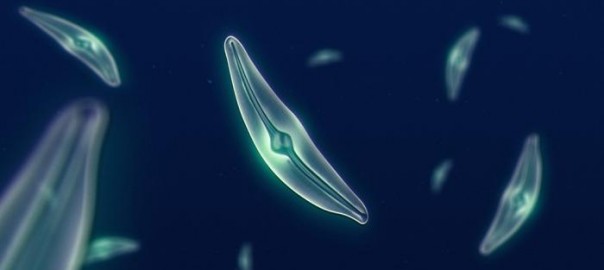
A review article involving Stephanie Dutkiewicz and Oliver Jahn suggests the diatoms have more diverse roles in carbon cycling than previously understood. Continue reading A More Diverse Role for Diatoms
Helen Hill | Darwin Project
A review article involving Stephanie Dutkiewicz and Oliver Jahn suggests the diatoms have more diverse roles in carbon cycling than previously understood. Continue reading A More Diverse Role for Diatoms

Helen Hill | Darwin Project
Microbes mediate the global marine cycles of elements, modulating atmospheric CO2 and helping to maintain the oxygen we all breath yet there is much about them scientists still don’t understand. Now, an award from the Simons Foundation will give researchers from the Darwin Project access to bigger, better computing resources to model these communities and probe how they work. Continue reading Phytoplankton & Chips
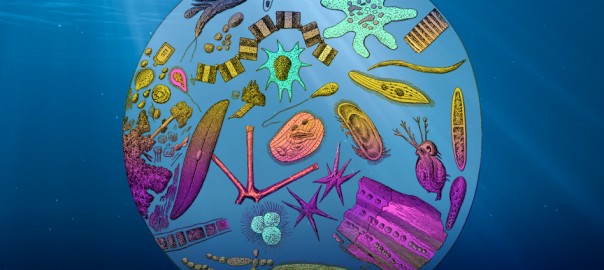
Study from Follows Group finds large amounts of carbon dioxide, equivalent to yearly U.K. emissions, remain in surface waters. Continue reading Rising Temperatures are Curbing Ocean’s Capacity to Store Carbon
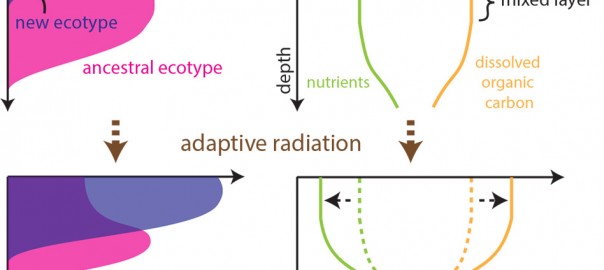
Ubiquitous marine organism has co-evolved with other microbes, promoting more complex ecosystems. Continue reading Tiny bacterium provides window into whole ecosystems
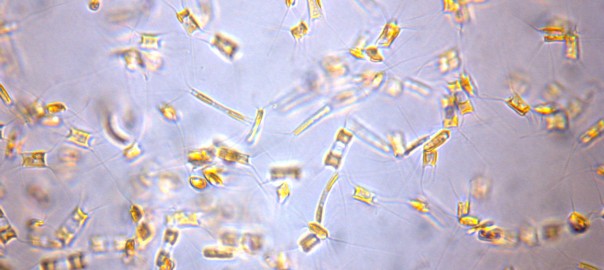
The elemental composition of organic matter is remarkably constant throughout the world’s oceans, but phytoplankton are known to take up nutrients and carbon in quite variable ratios depending on light and nutrient conditions.
In a paper published online in the journal Global Biogeochemical Cycles last month, Darwin Project researchers David Talmy (MIT), Christopher Hill (MIT), Anna Hickman (Univ. of Southampton, England), and Mick Follows (MIT), in a collaboration with Adam Martiny (Univ. of California, Irvine), report on their work seeking to understand what ecosystem factors could cause the elemental composition of organic matter to remain stable and relatively constant (homeostatic), even when the phytoplankton can have quite variable composition. Continue reading Keeping Things the Same
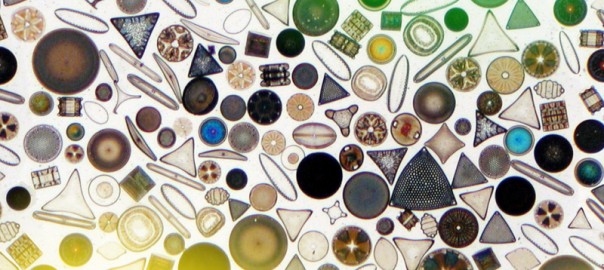
Study led by principal research scientist Stephanie Dutkiewicz finds many species may die out and others may migrate significantly as ocean acidification intensifies. Continue reading Ocean acidification may cause dramatic changes to phytoplankton
Dutkiewicz, S., J.J. Morris, M.J. Follows, J. Scott, O. Levitan, S.T. Dyhrman, and I. Berman-Frank, 2015, Impact of Ocean Acidification on the Structure of Future Phytoplankton Communities. Nature Climate Change, doi: 10.1038/nclimate2722
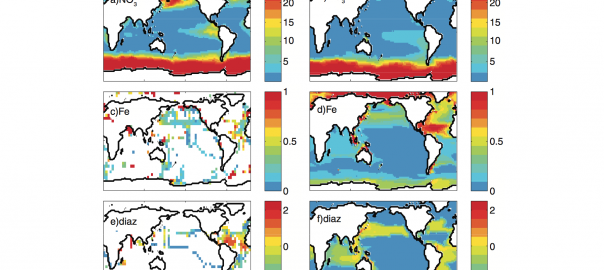
In their new competition theory paper, appearing in the 2014 issue of Biogeosciences, Dutkiewicz et al examine the sensitivity of the biogeography of nitrogen fixers to a warming climate and increased aeolian iron deposition in the context of a global earth system model. Continue reading Life on the Edge – How shifting marine province boundaries could provide a new metric for global change
Death, R., J.L. Wadham, F. Monteiro, A.M. Le Brocq, M. Tranter, A. Ridgwell, A., S. Dutkiewicz, and R. Raiswell, (2014) Antarctic Ice Sheet fertilises the Southern Ocean, Biogeosciences, 11, 2635-2643, doi: 10.5194/bg-11-2635-2014

Leaving the cold of a New England February behind, the Darwin team will be in full attendance at this year’s Ocean Sciences conference taking place February 23-28 in Honolulu, Hawaii.