When San Francisco’s Exploratorium moves into its new building on the waterfront next year, it promises to use technologies in ways never before seen in a museum. One of those experiences will be an interactive ocean, the product of a collaboration between scientists at UC Davis and MIT’s Darwin Project. Read more
All posts by admin
The Perfect Gift for Marine Microbiologists: Freedom to Try the Untested
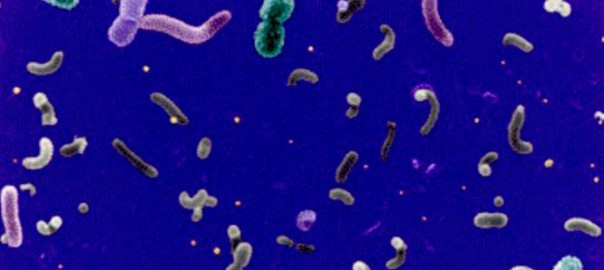
Among three from MIT, Mick Follows named Marine Microbiology Initiative investigator: Gordon and Betty Moore Foundation awards given to pursue high-risk research in marine microbial ecology. Read more at MIT News.
Power in Modeling Virtual Marine Microbes
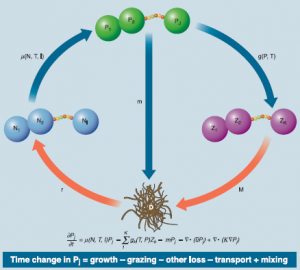
In this article, featured in the July issue of Microbe magazine, Darwin Project researcher Stephanie Dutkiewicz explains how, when used properly, models provide valuable insights into complex systems and sometimes yield surprising, even counterintuitive outcomes.
Publication
Prowe, A. E. F., M. Pahlow, S. Dutkiewicz, M. Follows, and A. Oschlies (2012), Top-down control of marine phytoplankton diversity in a global ecosystem model, Progr. Oceanogr., doi:10.1016/j.pocean.2011.11.016
Publication
Dutkiewicz, S. (2012), Power in Modeling Virtual Marine Microbes, Microbes magazine, 7, 314-319, LINK
At the intersection of biology and physics in the ocean
In this video, which grew out of a Plenary Lecture at the Spring 2012, American Geophysical Union, Ocean Sciences meeting in Salt Lake City ,UT, “Modeling Marine Microbes: From Molecules to Ecosystems”, Mick talks about the past, present and future of marine ecosystem modeling. In particular he explains how his group uses numerical simulations to understand the organization of plankton populations and how advances in cell biology and microbiology might inform future models.
Continue reading At the intersection of biology and physics in the ocean
Publication
Ward, B.A., S. Dutkiewicz, O. Jahn, and M.J. Follows (2012), A size structured food-web model for the global ocean: Linking physiology, ecology and biogeography, Limnology and Oceanography, 57, 1877-1891, doi: 10.4319/lo.2012.57.6.1877
Publication
Monteiro, F. and M.J. Follows (2012), On nitrogen fixation and preferential remineralization of phosphorus. Geophys. Res. Lett., 39, L06607, doi: 10.1029/2012GL050897
Publication
Dutkiewicz, S., B. A. Ward, F. Monteiro, and M. J. Follows (2012), Interconnection of nitrogen fixers and iron in the Pacific Ocean: Theory and numerical simulations, Global Biogeochem. Cycles, 26, GB1012, doi: 10.1029/2011GB004039
Microbe Metabolism
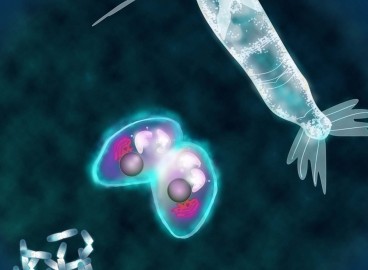
Population growth rate is a fundamental ecological and evolutionary characteristic of living organisms, but individuals must balance the metabolism devoted to biosynthesis and reproduction against the maintenance of existing structure and other functionality. Chris Kempes, Stephanie Dutkiewicz and Mick Follows have developed a mathematical model relating metabolic partitioning to the form of growth. The research is published in the Dec. 26 issue of the Proceedings of the National Academy of Sciences.