All posts by admin

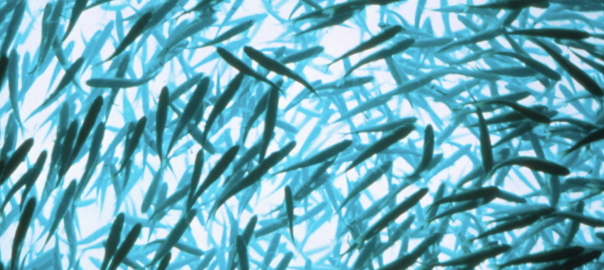
A swirling mass of Pacific jack mackerel, Trachurus symmetricus form a "bait ball" which draws feeding seabirds and marine mammals. (photo: Gulf of the Farallones NMS) (https://en.wikipedia.org/wiki/File:Trachurus_symmetricus_baitball.jpg)

Artificial Intelligence Helps Manage Global Fisheries

Reporting by Helen Hill for the MIT Darwin Project

Fisheries provide a significant source of protein for over half of the world’s human population, yet the impacts of historical overfishing and climate change challenge the future productivity of the world’s oceans. Traditional fisheries management rests on the assumption that the future will look like the past, however, with advances in AI (artificial intelligence) and burgeoning data resources, scientists have new tools for exploring a greater range of future scenarios, including climate change.  Continue reading Artificial Intelligence Helps Manage Global Fisheries
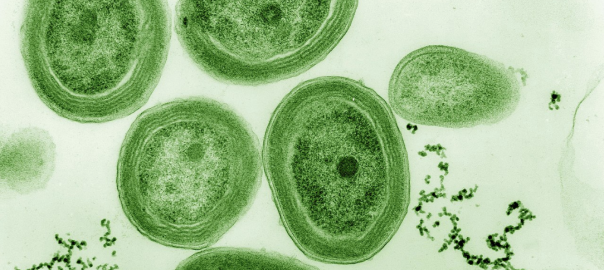
Pro

A Cellular View of Earth History

Reporting by Helen Hill for the MIT Darwin Project

For the past several years, Rogier Braakman, a research scientist working in Penny Chisholm’s lab and collaborating with Mick Follows, has been studying how metabolism evolves in ocean microbes. In a new paper, he argues that intrinsic properties of cellular metabolism imposed central constraints on the historical trajectories of biospheric productivity and atmospheric oxygenation.  Continue reading A Cellular View of Earth History

Jozef I. Nissimov, David Talmy, Liti Haramaty, Helen Fredricks, Ehud Zelzion, Benjamin Knowles, Murat Eren, Rebecca Vandzura, Christien P. Laber, Brittany M. Schieler, Christopher T. Johns, Kuldeep More, Marco J.L. Coolen, Michael J. Follows,  Debashish Bhattacharya, Benjamin A.S. Van Mooy, Kay D. Bidle (2019), Biochemical diversity of glycosphingolipid biosynthesis as a driver of Coccolithovirus competitive ecology, Enviromental Microbiology, doi: 10.1111/1462-2920.14633 Continue reading Biochemical diversity of glycosphingolipid biosynthesis as a driver of Coccolithovirus competitive ecology

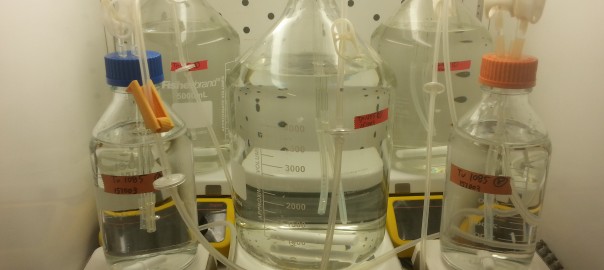
2015-10-03 16.00.40

When Phytoplankton Go Hungry

by Helen Hill for MIT CBIOMES

The Redfield ratio, the atomic ratio of carbon, nitrogen, and phosphorus (C:N:P) in phytoplankton and deep ocean waters, has often been treated as a constant 106:16:1. A new paper involving several CBIOMES co-authors, among them two from the MIT Darwin Group, presents compelling evidence for what causes this ratio to change within phytoplankton. Continue reading When Phytoplankton Go Hungry